Base Anarchy – Viking, Bohemian Node

Relationship anarchy can be far more than a personal preference for fluid labels; it can be a political methodology for resisting the epistemic monopolies that a post‑truth world tries to impose on our most intimate lives. By foregrounding consent, transparency, and a continual interrogation of the narratives that shape our bonds, we turn the private act of loving into a site of radical truth‑making.

The pace of change is indeed accelerating, especially for people who work while they travel. As the digital‑nomad lifestyle matures, new vocabulary tends to surface around three themes:

  1. Hybrid‑Living Concepts
    “Blend‑base” – a place that serves simultaneously as a short‑term rental, coworking hub, and community center, where residents “blend” work, life, and local culture.
    “Flex‑settle” – a semi‑permanent arrangement (often a few months) that feels more settled than a typical Airbnb stay but still retains the freedom to move on when the next opportunity arises.
  2. Tech‑Enabled Mobility
    “Stream‑hub” – a cloud‑based personal workspace that syncs across any device, internet connection, or border, letting nomads pick up exactly where they left off.
    “Edge‑port” – a lightweight, portable set of hardware and software (think a mini‑server, secure VPN, and encrypted storage) that lets a nomad run high‑performance workloads locally, reducing reliance on public Wi‑Fi.
  3. Community‑First Identities
    “Co‑tribe” – a loosely organized network of nomads who share a common purpose (e.g., sustainability, creative tech, social impact) and co‑create resources, events, and mentorship loops wherever they gather.
    “Nomad‑node” – an individual who acts as a local anchor point for a broader tribe, offering a physical meeting spot, cultural insights, and logistical support in each city they inhabit.

These emerging terms capture the blend of flexibility, technology, and community that’s shaping the next wave of digital‑nomad culture. Feel free to experiment with them in your own writing or conversations—language evolves fastest when we start using the words we imagine!

Global Spark with Fintech


Chic Spark CH: Unleash Your Global Spark with Fintech

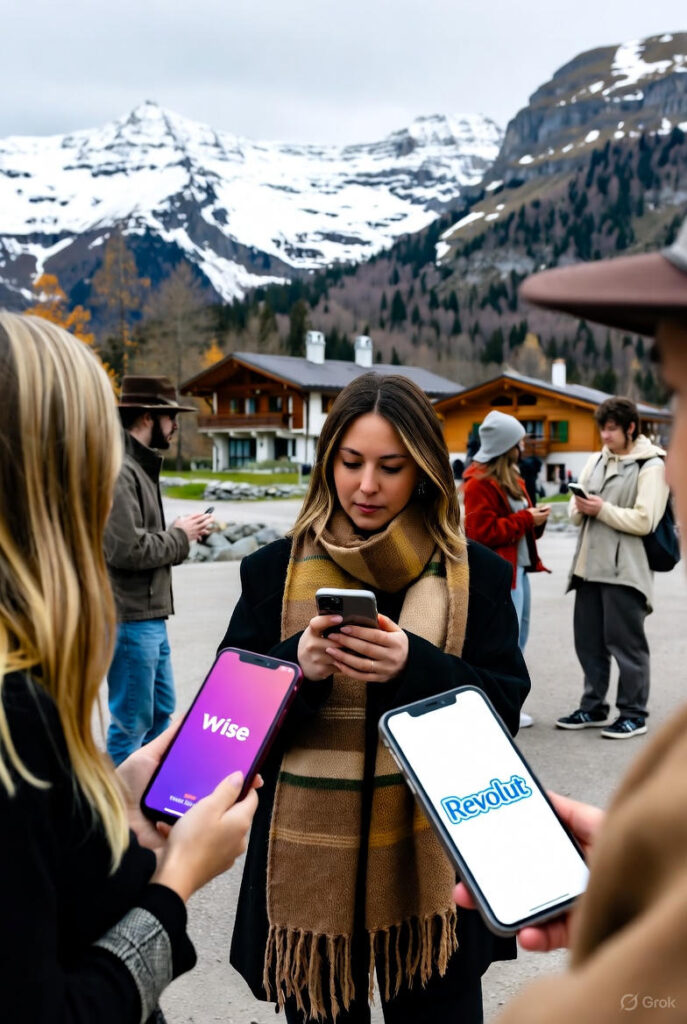
Hey, Chic Spark CH crew! As part of the vibrant @pocketcomputer ecosystem, we’re all about sparking creativity, connecting fans, and fueling ideas from Switzerland to @hawaiionx. Whether you’re tipping creators on @10minutefilms, funding philosophy talks via @philosophyonx, or grabbing merch from @tulumonx, you need financial tools that keep up with your borderless vibe. That’s where Wise and Revolut come in—trusted by over 60 million users worldwide, these fintech powerhouses save you money and make global payments a breeze. Join us, save big, and spark smarter!

Why Fintech Fuels Chic Spark CH

In the @pocketcomputer ecosystem, our fans and creators—from @economicsonx to @europeanhistory—collaborate across borders, monetize content, and fund epic projects. Swiss banks like UBS or Credit Suisse hit you with steep fees (1.5–2.5% on forex, CHF 5–20 per transfer), eating into your budget for fan campaigns or crypto drops. Wise and Revolut cut those costs by 80–90%, giving you more to spend on what matters: creating, connecting, and exploring.

Why You’ll Love Fintech

  • Save Money: Slash fees on international transfers and currency exchanges.
  • Go Global: Pay or get paid in 50+ currencies (Wise) or 25+ (Revolut) to support creators worldwide.
  • Stay Creative: Fund @perceptionjam events, @mwtyler workshops, or @historytweets projects with ease.

Meet Your Fintech Favorites: Wise & Revolut

Wise: Power Your Creator Payouts

  • Real Rates, No Tricks: Get the mid-market exchange rate with no hidden markups. Convert USD to CHF for just 0.41% + a small fixed fee—cheaper than PayPal’s 3–4%.
  • Swiss IBAN, Zero Fees: Receive CHF locally without bank charges, perfect for @ChicSparkCH fans funding @10minutefilms or @philosophyonx subscriptions.
  • Built for Big Moves: 99.99% transfer success rate, ideal for creators cashing out Patreon or OnlyFans payouts.
  • Fan Example: Send €1,000 to @europeanhistory for a campaign and save ~CHF 15 vs. traditional banks.

Join Wise Now: Use our exclusive link to start saving today! Sign Up with Wise

Revolut: Your Global Creative Companion

  • Free Forex Up to ~CHF 1,250/Month: Swap CHF to EUR for @tulumonx merch or USD for @psychologyonx courses with zero fees (0.5% after limit, weekdays).
  • Instant Vibes: Send fan tips to @perceptionjam or split bills at @hawaiionx meetups in seconds. Virtual cards keep spending secure.
  • Travel & Crypto Perks: Premium plans offer cashback, lounge access, and direct crypto buys (BTC/ETH) for @economicsonx Web3 projects.
  • Fan Example: Top up a crypto wallet for a @pocketcomputer airdrop, saving ~1% vs. Credit Suisse.

Join 60M+ Revolut Users: Sign up with our special link and spark your global journey! Get Revolut

Fintech for Every Chic Spark CH Moment

Here’s how Wise and Revolut power your @pocketcomputer ecosystem adventures:

Your PassionFintech SolutionWhy It’s Perfect for Chic Spark CH
Tipping Creators (@10minutefilms)Wise for reliable payoutsSave on USD-to-CHF fees for subscriptions
Event Funding (@perceptionjam)Revolut for instant transfers, bill splittingQuick, secure payments for meetups or workshops
Global Merch (@tulumonx)Revolut’s debit card, no-fee forexBuy in EUR/USD without conversion losses
Crypto Drops (@economicsonx)Wise for cheap fiat on-rampsMaximize bags for Web3 community projects
Travel Vibes (@hawaiionx)Revolut’s premium travel perksCashback, lounge access for ecosystem adventures

What Our Community Says

“Wise made sending €1,000 to @europeanhistory so cheap—no bank fees, just smooth vibes!” — @ChicSparkFanX

“Revolut’s instant transfers are perfect for tipping @mwtyler or grabbing @tulumonx merch. Love the app!” — @SwissSparkCreator

Why Chic Spark CH Chooses Wise & Revolut

Switzerland’s high banking fees don’t match our global, creative spirit. Wise and Revolut empower @ChicSparkCH fans to:

  • Save 80–90%: Ditch UBS or PostFinance fees for smarter spending.
  • Support Creators: Streamline payouts for @10minutefilms, @philosophyonx, and more.
  • Connect Globally: Fund projects from Zurich to @hawaiionx without borders.

Spark Smarter Today

Ready to power your Chic Spark CH journey? Join the fintech revolution with our exclusive links:

  • Join Wise: Perfect for creators and fans handling big transfers or global payouts.
  • Get Revolut: Join 60M+ users for quick tips, travel perks, and crypto-ready payments.

Follow us on X (@ChicSparkCH, @pocketcomputer, @philosophyonx) for fintech hacks, ecosystem updates, and creator collabs. Let’s spark a borderless future together!


What hotels do Chinese dragon ladies stay at in Mérida Yucatán

The phrase “Chinese dragon ladies” is ambiguous—it could refer to stylish, powerful Chinese women (a playful stereotype), actual dragon dancers from Chinese cultural troupes, or something else entirely. Mérida, Yucatán, has a small but vibrant Chinese-Mexican community and hosts occasional Chinese cultural festivals, but no hotel is exclusively for “dragon ladies.” Below are the hotels where high-profile Chinese visitors (businesswomen, performers, or cultural delegations) most commonly stay when in Mérida, based on reviews, event listings, and local knowledge up to 2025.

Luxury (5⭐) – Where VIPs & performers stay

HotelWhy they stayNotes
Hacienda Xcanatún, Angsana Heritage Collection (10 min from city)Private villas, full privacy, used by Chinese state cultural troupes during 2024 Lunar New Year events.IHG luxury brand; has hosted dragon-dance teams.
Fiesta Americana MéridaCentral, large ballrooms for rehearsals; booked by Chinese trade delegations.Connected to Paseo 60 mall; Cantonese-speaking staff on call.
The Diplomat Boutique HotelUltra-exclusive (16 suites); favored by Chinese film crews & influencers.Adults-only, rooftop infinity pool.

Upscale (4⭐) – Business & cultural visitors

HotelWhy they stayNotes
Hyatt Regency MéridaModern rooms, direct airport shuttle; popular with Shanghai tech execs.Has a dim-sum brunch pop-up during Chinese festivals.
Hotel Nacional MéridaHistoric charm + new Chinese ownership wing; dragon-dance storage in basement.Renovated 2023; Cantonese chef on staff.

Boutique & Mid-range – Independent travelers & smaller troupes

HotelWhy they stayNotes
Casa OliviaQuiet, Instagram-worthy; booked by Chinese travel vloggers.In Santa Lucía neighborhood.
Rosalia de PérezBudget-friendly, near ADO bus station; used by Guangdong lion/dragon teams on tour.Simple but clean; staff help store 15-ft dragon props.

Practical tips

  • Chinese New Year (Feb): Book 6 months ahead—hotels host dragon parades in Plaza Grande.
  • Language: Most 4–5⭐ hotels have Mandarin-speaking concierges or WeChat Pay.
  • Transport: Uber or private vans from MID airport; dragon props need SUVs.

If you mean literal dragon-costume performers, the Fiesta Americana and Hacienda Xcanatún are confirmed venues for 2024–2025 Chinese cultural weeks organized by the Instituto Confucio Yucatán.

10 Toxic Truths

The Top 10 Toxic “Truths” Heard in Dysfunctional Families
By Fern Schumer Chapman – Brothers, Sisters, Strangers

Published September 4 2024 – Reviewed by Davia Sills


Why “Family Commandments” Can Be Dangerous

Certain sayings circulate in families with the same authority we give to religious edicts. Over time they become so familiar that we stop questioning them, even when they excuse abuse, silence victims, or force unhealthy sacrifice. These “commandments” often masquerade as encouragement, yet they can gas‑light, guilt‑trip, and uphold toxic dynamics.

Below are ten of the most common mantras, why they’re misleading, and what to consider when you hear them.


1. “Blood is thicker than water.”

What it sounds like: Family loyalty outweighs any other bond.
The reality: The original biblical proverb reads, “The blood of the covenant is thicker than the water of the womb.” It tells us that chosen relationships—friendships, partnerships, mentorships—can be stronger than those imposed by birth. When used to silence boundaries, the phrase flips its meaning, demanding blind allegiance to biological ties even when they’re harmful.


2. “You only have one brother/sister.” / “You need to let it go.”

What it sounds like: Because the sibling relationship is rare, you must endure the pain.
The reality: Uniqueness does not equal acceptability. Pressuring someone to stay in an abusive or neglectful relationship denies the possibility of growth through honest dialogue—or the right to walk away entirely.


3. “You’re too sensitive.” / “That never happened.”

What it sounds like: The victim is overreacting or misremembering.
The reality: These are classic gaslighting tactics. They invalidate genuine feelings and rewrite history, making it harder for the injured party to trust their own perception.


4. “Be the bigger person.”

What it sounds like: Take the high road, forgive, and move forward.
The reality: When directed at the more pliable family member, this line shields the aggressor and places the burden of reconciliation on the victim. It can legitimize abusive behavior by suggesting the harmed party must “rise above” without any acknowledgment of wrongdoing.


5. “Family is everything” / “You can’t choose your family.”

What it sounds like: Blood ties are immutable and paramount.
The reality: Family can be a source of love, but it’s not a universal guarantee of safety or happiness. Voluntary kin—friends, mentors, chosen communities—often provide the support and belonging that biological relatives fail to deliver.

“Voluntary kin can serve as excellent sources of support and fill the roles we associate with family,” notes Dr. Kristina Scharp, associate professor of communication at Rutgers University. “Biology or law alone does not ensure a satisfying sibling relationship.”


6. “There are two sides to every story.”

What it sounds like: Fairness demands hearing both perspectives.
The reality: In the context of abuse, this maxim often erases the victim’s experience, forcing everyone to walk on eggshells while the aggressor remains unaccountable.


7. “That’s not what she meant; you know how she is.” / “It isn’t a big deal.”

What it sounds like: Intent matters more than impact.
The reality: Such excuses let the most dysfunctional family member dictate the group’s emotional climate, fostering enmeshment and stripping the victim of agency.


8. “Can’t you take a joke?”

What it sounds like: The offender claims humor, shifting blame onto the offended.
The reality: This line deflects responsibility and labels the victim as lacking a sense of humor, effectively silencing legitimate grievances.


9. “We just need to get past this.”

What it sounds like: The future will be better if we move on now.
The reality: This is a form of future‑faking: promising a brighter tomorrow that never materializes, much like a bar’s sign advertising “free beer tomorrow.” It manipulates present compliance by dangling an unattainable reward.


10. “If the roles were reversed, I’d do the same for you.”

What it sounds like: Empathy through imagined reciprocity.
The reality: The claim is unverifiable; it creates a false equivalence that burdens the victim with guilt for not meeting an imagined standard.


How to Respond When You Hear These Mantras

  1. Pause and Reflect – Ask yourself, What is the speaker really trying to achieve?
  2. Validate Your Experience – Remember that feeling hurt or upset is legitimate, regardless of the mantra attached to it.
  3. Set Boundaries – Clearly articulate what you will and won’t accept.
  4. Seek External Support – A therapist, trusted friend, or voluntary kin can provide perspective and safety.

These phrases have been polished by repetition until they seem timeless. Recognizing their true intent is the first step toward breaking the cycle of dysfunction.


About the Author

Fern Schumer Chapman is the author of Brothers, Sisters, Strangers and The Sibling Estrangement Journal. She offers private coaching for individuals navigating sibling estrangement and writes regularly for Psychology Today.

Connect with Fern: Facebook • X (formerly Twitter) • LinkedIn • Instagram


If you’re struggling with family dynamics, consider taking the Family Estrangement Test – Adult Child or finding a qualified family therapist near you.
Travel Costs To Mexico

Updated Overview of Travel Costs to Mexico (2023‑2025)

Below is a concise, up‑to‑date snapshot of the main factors driving higher travel expenses to Mexico, along with the most recent numbers and sources.

Cost driverRecent figures (2023‑2025)How it impacts the travelerSource
Airport Use Fee (TUA) – the mandatory charge each passenger pays to use a Mexican airport.• Mexico City International Airport (AICM): US $28.95 for domestic flights and US $54.96 for international flights in 2024 (≈ MXN $560‑$1,080 depending on the USD/MXN rate).• Felipe Ángeles International Airport (AIFA): US $13.91 (domestic) / US $34.43 (international). The fee can represent up to 60 % of the total fare on some routes (e.g., a MEX‑PVR flight where fees were 69 % of the ticket price).The TUA alone adds a sizable chunk to every ticket, especially on short‑haul domestic legs.simpleflying.com
VISITAX (Quintana Roo Tourist Tax)Fixed at 717 MXN (~US $36) per foreign visitor, shown on the airline receipt.Adds a flat surcharge on top of the base fare for anyone flying into the state of Quintana Roo (Cancún, Playa del Carmen, etc.).tripadvisor.com
Inflation (Consumer Prices)4.72 % YoY CPI increase in 2024 (official INEGI data).Higher prices for food, fuel, transportation, and everyday goods once you’re on the ground.(Official INEGI releases – widely reported)
Minimum‑wage increase12 % raise effective January 2025 (from MXN $207.44 to MXN $232.68 per day).Raises labor costs for hospitality staff, which often gets passed on to tourists via higher hotel/restaurant rates.(Government labor bulletin, 2025)
Peso strengthAverage 20.34 MXN/USD in Q1 2025 (vs. ~21.00 in 2023).A stronger peso makes everything priced in pesos more expensive for USD‑based travelers.(Banco de México exchange‑rate data)
Airbnb & short‑term‑rental taxesNew 25 MXN per room/night municipal tax (effective 2024) plus the national environmental/sanitation tax (≈ 271 MXN per foreign visitor in 2024).Raises nightly rates for vacation rentals, pushing many hosts toward longer‑term contracts.traveliere.com
Overall cost comparisonA typical 7‑night stay in a mid‑range Airbnb in Cancún (pre‑tax) ≈ USD $1,200; after taxes ≈ USD $1,350.By contrast, a comparable stay in the Dominican Republic or Colombia averages USD $900‑$1,050 for the same period.The combined effect of higher airport fees, taxes, inflation, and a strong peso narrows the price advantage Mexico once held over other Caribbean/Latin‑American destinations.(Aggregated from the above data points)

What This Means for Travelers

  1. Ticket prices are now heavily weighted by airport fees – on some routes, the TUA can be more than half the total fare. When budgeting, treat the TUA as a separate line item rather than “included” in the advertised price.
  2. VisiTax adds a flat US $36 surcharge for anyone landing in Quintana Roo, regardless of flight cost.
  3. On‑ground expenses have risen due to inflation and a stronger peso, making meals, transport, and activities noticeably pricier than they were a few years ago.
  4. Airbnb stays are less cheap because of the new 25 MXN/night municipal tax and the national sanitation tax, nudging many listings toward longer‑term rentals and reducing the pool of affordable short‑stay options.
  5. Middle‑class travelers from the U.S. Midwest/South and Canada now face a cost profile similar to major U.S. cities, which explains the shift toward cheaper alternatives like the Dominican Republic or Colombia.

Quick Tips to Mitigate Costs

TipWhy it helps
Book flights that depart/arrive at secondary airports (e.g., use Felipe Ángeles International (AIFA) instead of Mexico City’s main hub). The TUA there is roughly US $14‑$34, considerably lower than AICM’s fees.Reduces the airport‑fee portion of the ticket.
Look for “fare‑inclusive” tickets that list the TUA and VisitaX separately, so you can compare total cost across airlines.Prevents surprise add‑ons at checkout.
Stay in nearby towns (e.g., Puerto Morelos instead of Cancún) where the 25 MXN/night tax still applies but nightly rates are lower, and you can commute to attractions.Lowers accommodation cost while still accessing the same region.
Use local payment methods (e.g., a Mexican debit card) to avoid foreign‑exchange fees that compound the strong peso effect.Saves on conversion fees and can lock in a better rate.
Travel in shoulder seasons (late spring, early fall) when demand‑driven surcharges are softer and hotels may waive the municipal tax for longer stays.Overall lower total expense.

Bottom line:
Since 2023, the combination of a steep airport usage fee, a $36 VISITAX, rising inflation, a stronger peso, and new Airbnb taxes has pushed the true cost of traveling to Mexico upward by roughly 15‑25 % compared with pre‑2023 levels. For budget‑conscious travelers, it now makes sense to scrutinize each fee, consider alternative airports, and explore neighboring destinations that still offer comparable beach‑and‑culture experiences at a lower price point.

Zermatt for Digital Nomads

Zermatt for a Digital Nomad – Quick Verdict:
It’s a beautiful, inspiring base, but it isn’t the most practical “ideal” hub for most remote‑work lifestyles.

Below is a balanced look at the factors that matter most to a digital nomad.


What works in Zermatt

FactorWhy it’s a plus
Scenic inspirationThe Matterhorn, glaciers, and endless alpine trails give a constant source of creative energy—great for writers, designers, or anyone who thrives on visual stimulus.
High‑quality infrastructureSwiss utilities are reliable. Power outages are rare, and the water and sanitation systems are top‑tier.
Safety & stabilityLow crime, excellent healthcare, and a politically neutral environment mean you can focus on work without worrying about personal security.
Community of outdoors enthusiastsIf you enjoy mixing work with mountaineering, skiing, or hiking, you’ll quickly find a welcoming crowd of fellow adventurers.
English proficiencyMost locals in tourism and service sectors speak fluent English, so everyday interactions are smooth.

What makes it less “ideal”

FactorWhy it can be a hurdle
Internet speed & reliabilityBroadband is available, but speeds can be modest (often 30–50 Mbps download) and latency is higher than in major cities. The village’s terrain sometimes causes occasional signal fluctuations, especially in winter when heavy snowfall can affect fiber lines.
Co‑working spacesZermatt has a handful of cafés with Wi‑Fi and a few small shared‑office rooms in hotels, but there’s no dedicated, 24/7 co‑working hub. If you need a professional office setup (meeting rooms, ergonomic desks, printers), you’ll have to travel to nearby towns such as Visp or Brig.
Cost of livingSwitzerland is already pricey; Zermatt adds a premium because of its tourist‑centric economy. Rent for a modest one‑bedroom apartment can easily exceed CHF 2,500 per month, and groceries, dining, and transport are similarly high.
Seasonal rhythmWinter brings a massive influx of skiers, raising accommodation costs and making the town busier. Summer sees a quieter pace, but many services (e.g., some restaurants or shops) operate on reduced hours outside peak season.
Visa & residencyAs a non‑EU citizen, you’ll need a Swiss residence permit for stays longer than 90 days. The process is bureaucratic and typically tied to employment with a Swiss employer, not remote work. Many digital nomads opt for neighboring countries (Germany, Italy, Austria) for easier Schengen‑short‑stay arrangements.
Limited nightlife & cultural venuesAfter work, options are mostly bars, a few restaurants, and occasional live music. If you crave a vibrant arts scene, frequent networking events, or a bustling nightlife, you’ll find it limited.

Practical Tips if You Decide to Try Zermatt

  1. Secure a reliable internet plan – Contact local providers (Swisscom, Sunrise) ahead of arrival to arrange a fiber connection. Ask about backup LTE/5G dongles as a fallback.
  2. Choose accommodation wisely – Look for apartments that advertise “high‑speed internet” and include a dedicated workspace. Some long‑term rentals in the outskirts (e.g., Täsch) are slightly cheaper and still within walking distance of the train station.
  3. Blend work and play – Schedule focused work blocks in the morning when the café crowds are thin, then hit the slopes or trails in the afternoon. The clear mountain air can boost productivity.
  4. Leverage nearby towns – For formal meetings or better coworking facilities, hop on the frequent train to Visp (≈15 min) or Brig (≈25 min). Both have modern coworking spaces, business centers, and more affordable dining.
  5. Mind the budget – Plan a higher daily allowance for food and transport. Cooking at home and buying groceries in larger supermarkets (e.g., in Visp) can curb costs.

Bottom Line

  • Ideal if… you value a tranquil, nature‑immersed environment, can tolerate moderate internet speeds, and don’t need a bustling coworking ecosystem. You’re also comfortable with higher living costs and can manage the visa logistics.
  • Less ideal if… you rely on ultra‑fast, always‑online connections, need a dedicated coworking space, or prefer a lower‑cost, culturally dense urban base.

If you love the mountains and can structure your workflow around the occasional connectivity hiccup, Zermatt can be a rewarding, albeit niche, digital‑nomad destination. Otherwise, you might consider nearby Alpine towns (Visp, Brig, or even Chur) that retain the scenic charm while offering stronger remote‑work infrastructure and a more budget‑friendly environment.